$50.00 – $750.00Price range: $50.00 through $750.00
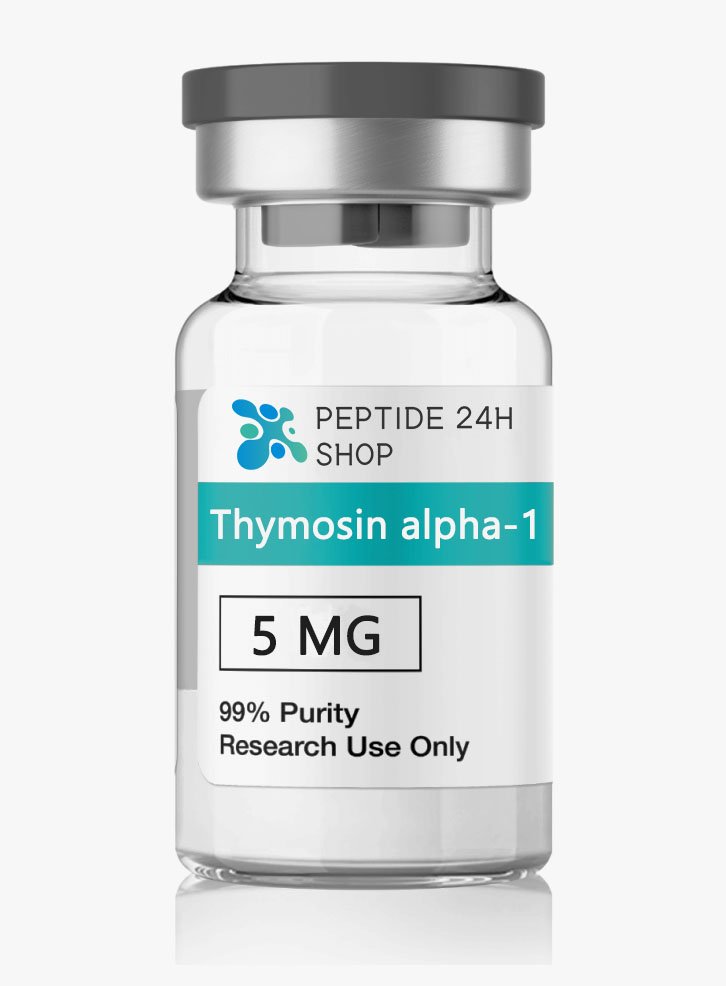
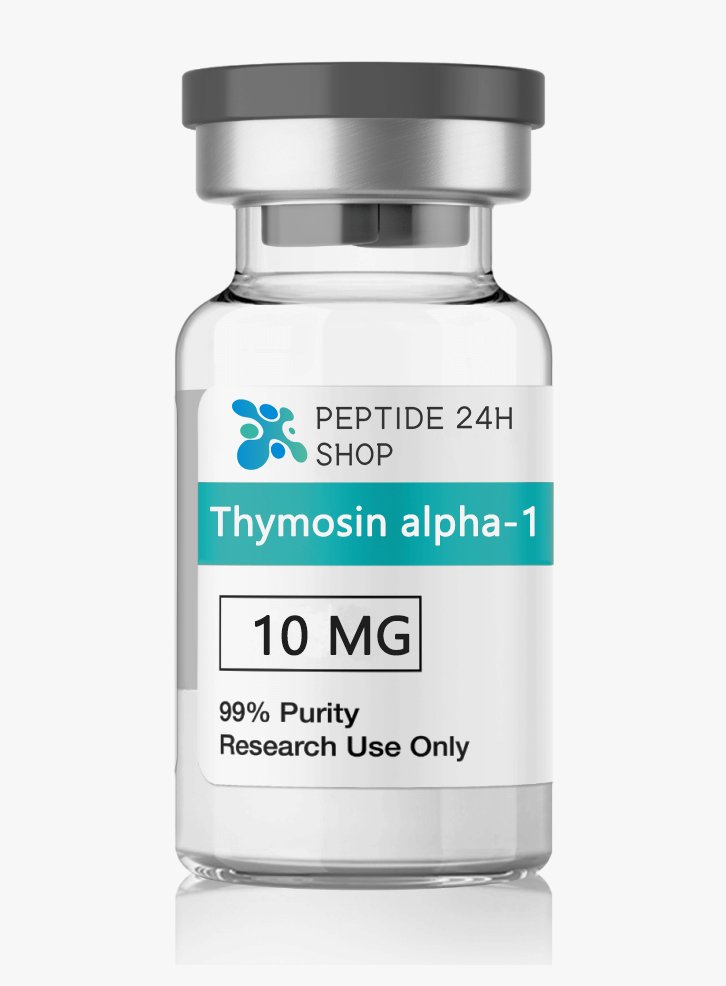
Name: Thymosin alpha-1; Thymalfasin; Thymosin α1
CAS No.: 62304-98-7
Peptide Sequence: Ac-Ser-Asp-Ala-Ala-Val-Asp-Thr-Ser-Ser-Glu-Ile-Thr-Thr-Lys-Asp-Leu-Lys-Glu-Lys-Lys-Glu-Val-Val-Glu-Glu-Ala-Glu-Asn
Molecular Formula: C129H215N33O55
Molecular Weight: 3108.3
Appearance: White Lyophilized powder
Thymosin Alpha-1 (Tα1) peptide is a synthetic peptide derived from the thymus gland and widely used in research for studying immune regulation, T-cell activity, and antiviral mechanisms.
It is valued for its high stability, purity, and reproducible biological activity, making it a key tool in laboratory studies exploring immunomodulation and cellular defense mechanisms.
Thymosin Alpha-1 is a small, biologically active peptide that plays a crucial role in immune system modulation. It stimulates T-cell production and activity, enhances cytokine release, and improves immune surveillance in research models.
Key research applications include:
Immune system studies – T-cell modulation and immune response regulation
Antiviral research – Studying immune responses against viral infections
Cancer immunology – Investigating Tα1 effects on immune surveillance of tumor cells
Cell signaling studies – Understanding peptide interactions with immune cell receptors
Its precise, reproducible effects make it ideal for controlled laboratory experiments.
| Property | Description |
|---|---|
| Peptide Name | Thymosin Alpha-1 (Tα1) |
| Amino Acid Length | 28 amino acids |
| Purity | ≥98% (HPLC verified) |
| Form | Lyophilized powder |
| Molecular Weight | 3108 g/mol |
| Storage Temperature | –20°C (long-term stability) |
High-purity Thymosin Alpha-1 ensures consistent experimental outcomes in immunology and cellular research.
Thymosin Alpha-1 peptide is for laboratory research only. Key research applications include:
Immunomodulatory Studies – Modulating T-cell activity and cytokine production.
Antiviral Research – Investigating peptide-mediated enhancement of viral defense.
Cancer Immunology – Evaluating effects on immune surveillance and tumor suppression pathways.
Cell Signaling Research – Studying immune cell receptor interactions and downstream pathways.
By using Tα1 in controlled experiments, researchers can explore immune response mechanisms and therapeutic pathways accurately.
Boosts T-cell activity for immunology studies
High purity and stability ensures reliable experimental outcomes
Reproducible performance in preclinical and cellular research
Scientifically validated for immunomodulation and antiviral studies
Easy handling and reconstitution for laboratory use
Store lyophilized Thymosin Alpha-1 at –20°C, protected from light and moisture.
Reconstitute with sterile water or buffer before experimental use.
After reconstitution, refrigerate at 2–8°C and use within the recommended timeframe.
Avoid repeated freeze–thaw cycles to maintain peptide bioactivity.
Thymosin Alpha-1 peptide is for laboratory research use only.
It is not approved for human or veterinary use.
Use exclusively in controlled laboratory environments by qualified personnel.
Q1: What is the main research use of Thymosin Alpha-1?
Thymosin Alpha-1 is primarily used for immune system studies, T-cell regulation, antiviral research, and cancer immunology.
Q2: What is the purity of Thymosin Alpha-1 peptide?
High-quality Tα1 peptide is ≥98% pure, verified using HPLC analysis.
Q3: Can Thymosin Alpha-1 be used in humans?
No, this peptide is strictly for research purposes and not approved for human use.
Q4: How should Thymosin Alpha-1 peptide be stored?
Store lyophilized at –20°C, and after reconstitution, refrigerate at 2–8°C. Avoid repeated freeze–thaw cycles.
Q5: Why is Thymosin Alpha-1 important for research?
Its ability to modulate T-cell function, cytokine release, and immune surveillance makes it critical for studies in immunology, antiviral defense, and cancer research.
Thymosin Alpha-1 peptide is a research-grade, immunomodulatory peptide that supports studies of T-cell regulation, immune response, and antiviral defense.
Its high purity, stability, and reproducible activity make it an essential tool for laboratories conducting immunology, cellular biology, and preclinical therapeutic research.