$85.00 – $259.00Price range: $85.00 through $259.00
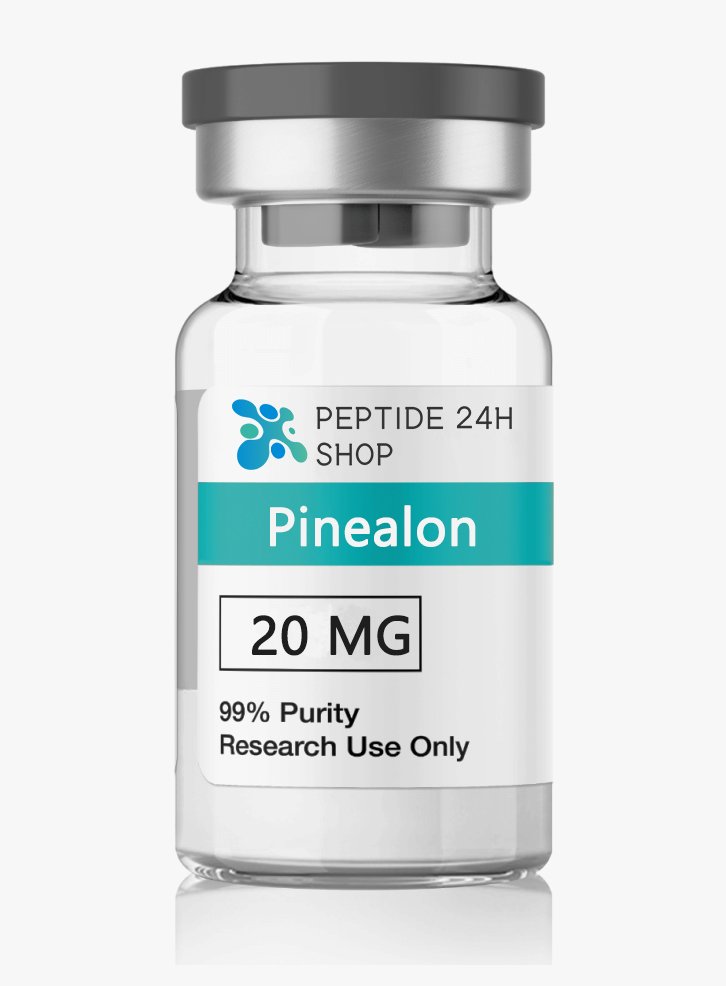
Name: Pinealon; glutamyl-aspartyl-arginine
CAS No.: N/A
Peptide Sequence: H-Glu-Asp-Arg-OH
Molecular Formula: C15H26N6O8
Molecular Weight: 418.4
Appearance: White Lyophilized powder
Pinealon peptide is a synthetic tripeptide complex that has become an important subject in neurochemical and biochemical research. Derived from naturally occurring short peptides, Pinealon is studied for its potential role in cellular protection, regulation of oxidative balance, and peptide-based signaling within neural and endocrine systems.
As a research-use-only (RUO) compound, Pinealon is not approved for medical or dietary use. Instead, it is applied in academic and laboratory studies focusing on peptide activity, metabolic regulation, and cellular biochemistry.
Peptide Name: Pinealon
Sequence: Glu-Asp-Arg
Molecular Formula: C₁₂H₂₀N₆O₈
Molecular Weight: 392.33 g/mol
Peptide Type: Synthetic tripeptide analog
Form: Lyophilized powder
Purity: ≥ 98 % (HPLC verified)
The simplicity of Pinealon’s three-amino-acid sequence allows precise study of short-chain peptide interactions and cellular response mechanisms under laboratory conditions.
Pinealon belongs to a class of short regulatory peptides developed through peptide bioregulation research. These peptides are designed to mimic fragments of natural regulatory proteins that influence gene expression, cell division, and metabolic balance.
In laboratory models, Pinealon has been used to explore:
Oxidative-stress response at the cellular level
Gene-expression modulation in neuronal cultures
Cytoprotective activity against free-radical damage
Neuropeptide signaling pathways related to brain metabolism
While findings remain experimental, Pinealon serves as an important model compound for studying small-molecule peptide biochemistry.
Pinealon’s structure allows researchers to evaluate how short peptides interact with reactive oxygen species and support cellular redox regulation in vitro.
Experimental models use Pinealon to investigate neurotransmitter modulation and peptide-receptor communication within the central nervous system.
Because it is a small, compact molecule, Pinealon provides insight into how tripeptides resist enzymatic breakdown and maintain activity during long-term experiments.
Pinealon peptide is used across multiple research domains, including:
Molecular biology – studying peptide-gene interaction and transcriptional regulation
Neuroscience – examining cellular stress responses and neuropeptide signaling
Biochemistry – analyzing oxidative defense mechanisms and peptide stability
Peptide engineering – exploring tripeptide design for bioactivity testing
Its minimalistic structure makes Pinealon an efficient model in short-peptide design and synthetic biopeptide analysis.
Storage: −20 °C (lyophilized)
Solubility: Water or buffer (pH 7.0–7.4)
Shelf Life: 24 months if unopened and dry
Reconstitution: Prepare fresh solution for each experiment
Handling: Avoid repeated freeze–thaw cycles
Usage: For research use only; not for human or veterinary applications
Pinealon peptide is not approved by the FDA, EMA, or TGA for therapeutic, dietary, or cosmetic use.
Distribution and labeling must clearly specify “for research use only (RUO)”.
Follow all local laboratory biosafety guidelines for peptide handling and disposal.
Pinealon peptide stands out as a versatile research compound for investigating short-chain peptides and their biological roles in cellular stability and oxidative regulation.
Its simple yet bioactive structure makes it an ideal model for studying how small peptides influence metabolic processes and molecular communication in neural and somatic cells.
While not intended for human use, It continues to serve as a key tool for advancing our understanding of peptide bioregulation and cellular homeostasis in modern biochemistry.