$55.00 – $159.00Price range: $55.00 through $159.00
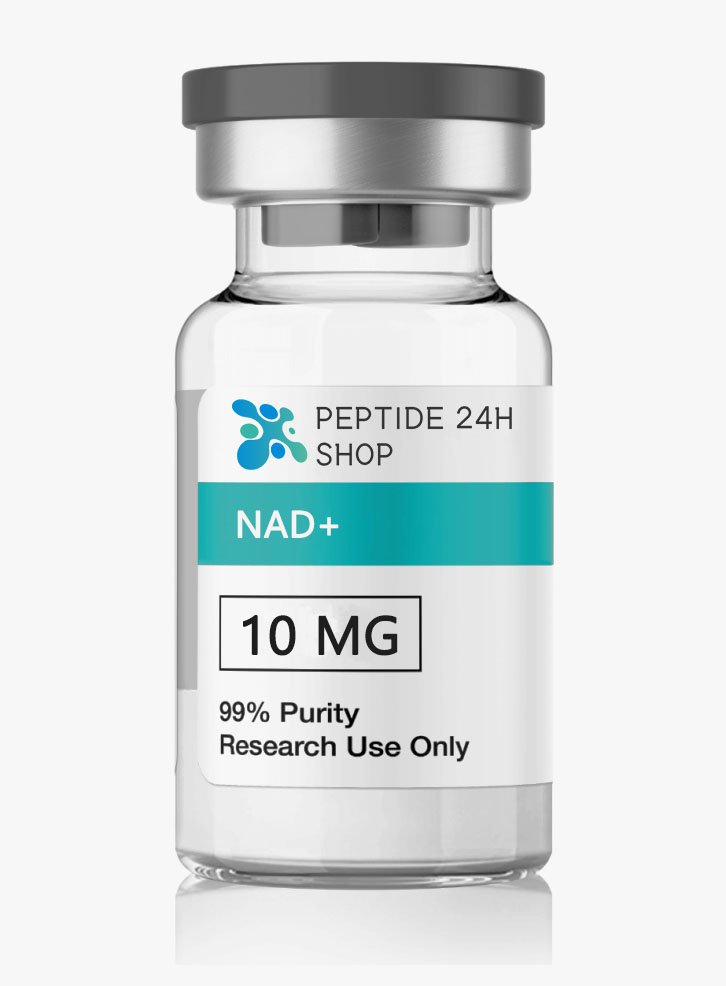
Name: ??-Nicotinamide Adenine Dinucleotide (NAD+)
CAS No.: 53-84-9
Molecular Formula: C21H27N7O14P2
Molecular Weight: 663.4
Appearance:White to yellowish powder or erystalline powder
NAD⁺ peptide is an innovative compound that merges the well-known coenzyme nicotinamide adenine dinucleotide (NAD⁺) with peptide-based delivery technology. As a central molecule in cellular metabolism, NAD⁺ is essential for energy transfer, DNA repair, and cellular signaling. Researchers have developed NAD⁺ peptide conjugates to explore how peptide structures can enhance bioavailability, cellular uptake, and stability in experimental settings.
These NAD⁺-linked peptides serve as advanced research tools, helping scientists understand how biochemical carriers influence coenzyme distribution and intracellular utilization.
Nicotinamide adenine dinucleotide (NAD⁺) is a naturally occurring coenzyme found in all living cells. It plays a critical role in redox reactions, transferring electrons between molecules to generate ATP — the energy currency of cells.
In its oxidized form (NAD⁺), it participates in numerous metabolic pathways, including glycolysis, the Krebs cycle, and oxidative phosphorylation.
Over time, NAD⁺ levels in biological systems tend to fluctuate, prompting scientific interest in compounds that may affect its production, recycling, or stability. The NAD⁺ peptide represents one such research-oriented innovation.
While NAD⁺ peptide formulations vary depending on synthesis method and purpose, they typically feature:
Core Component: Nicotinamide adenine dinucleotide (NAD⁺)
Linked Structure: Short peptide chain (customizable sequence)
Molecular Type: Peptide–coenzyme conjugate
Form: Lyophilized powder or sterile solution
Solubility: Water, saline, or phosphate buffer (pH ~7.4)
This conjugation allows scientists to investigate how peptide-based carriers influence NAD⁺ transport and activity in biological systems.
The combination of peptides and NAD⁺ originates from the broader field of bioconjugate chemistry—a discipline exploring how biologically active molecules can be combined for improved targeting, stability, and reactivity.
NAD⁺ peptide analogs are being studied in cellular biology, enzymology, and biochemical engineering to evaluate:
Coenzyme–enzyme interaction kinetics
Cellular uptake mechanisms of conjugated molecules
Peptide stability and enzymatic resistance
Modulation of NAD⁺-dependent pathways in experimental models
While research on NAD⁺ peptides remains in the early stages, studies often focus on:
NAD⁺ is a cofactor in hundreds of redox reactions. Researchers use NAD⁺ peptide conjugates to analyze ATP generation efficiency, oxidative stress balance, and energy transfer in cell models.
Many enzymes—such as sirtuins, poly(ADP-ribose) polymerases (PARPs), and dehydrogenases—rely on NAD⁺. Peptide-bound NAD⁺ analogs allow precise observation of enzyme-cofactor interactions under controlled conditions.
Peptide-linked NAD⁺ analogs serve as tools to explore cell membrane transport, coenzyme trafficking, and metabolic compartmentalization in living systems.
NAD⁺ peptide is used strictly for laboratory and academic purposes, often in:
Metabolic pathway modeling
Peptide-based coenzyme delivery studies
Redox chemistry experiments
Cellular aging and stress-response research (basic, preclinical models)
Its hybrid nature — combining coenzymes with peptide frameworks — makes it a promising compound for advancing bioengineering and molecular biology investigations.
Storage: –20 °C, desiccated
Stability: Stable for up to 24 months in lyophilized form
Reconstitution: Use sterile water or buffer immediately before experiments
Usage: For research use only (RUO) — not for human or veterinary consumption
NAD⁺ peptide is not approved by the FDA, EMA, or other regulatory authorities for medical or dietary use.
It must be clearly labeled “for research use only” (RUO) and handled by trained professionals in accordance with institutional laboratory safety standards.
The NAD⁺ peptide represents an exciting advancement in biochemical and peptide research — blending a critical metabolic coenzyme with peptide engineering to study energy regulation, enzymatic activity, and molecular transport.
While not approved for therapeutic use, it continues to play an important role in basic science and molecular biochemistry, helping researchers better understand the intricate balance of cellular energy dynamics and biomolecular stability.