$95.00
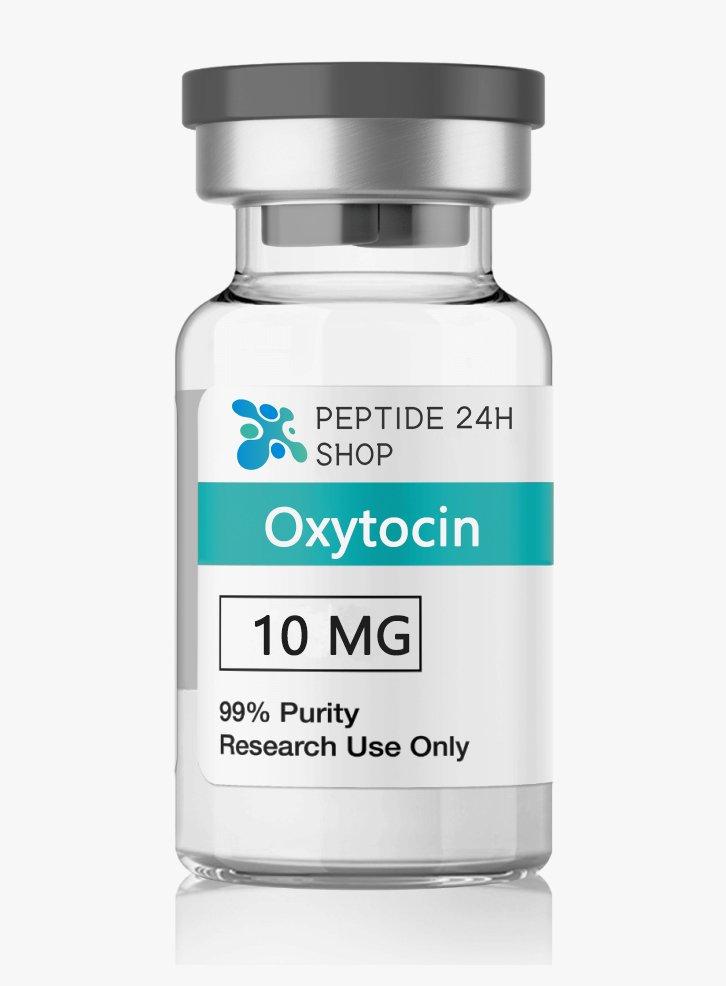
Name: Oxytocin
CAS No.: 50-56-6
Peptide Sequence: Cys-Tyr-Ile-Gln-Asn-Cys-Pro-Leu-Gly-NH2(Cys&Cys bridge)
Molecular Formula: C43H66N12O12S2
Molecular Weight: 1007.19
Appearance: White Lyophilized powder
Oxytocin peptide is a naturally inspired nonapeptide hormone analog widely recognized for its role in social bonding, reproduction, and neurochemical signaling. In research contexts, synthetic Oxytocin serves as a precise biochemical model for studying peptide–receptor interactions, endocrine mechanisms, and neuromodulation pathways.
As a research-use-only (RUO) compound, the synthetic Oxytocin peptide is used exclusively for laboratory, biochemical, and molecular biology applications. It is not intended for human or veterinary use outside controlled scientific studies.
Peptide Name: Oxytocin
Sequence: Cys–Tyr–Ile–Gln–Asn–Cys–Pro–Leu–Gly–NH₂
Molecular Formula: C₄₃H₆₆N₁₂O₁₂S₂
Molecular Weight: 1007.19 g/mol
Peptide Type: Cyclic nonapeptide (disulfide bridge between Cys¹ and Cys⁶)
Form: Lyophilized white powder
Purity: ≥98% (HPLC verified)
The disulfide bond between cysteine residues gives Oxytocin its cyclic structure, enhancing stability and receptor specificity. Synthetic analogs allow scientists to modify the molecule and explore how small structural changes affect receptor binding and biological activity.
Originally isolated in the early 20th century, Oxytocin has since become one of the most studied neuropeptides in biochemistry and neuroscience.
In research, Oxytocin peptide is used to explore:
Neurochemical communication in the hypothalamus and pituitary axis
Signal transduction in social and behavioral processes
Receptor binding dynamics at the OXTR receptor
Molecular stability and peptide analog synthesis
Synthetic forms of Oxytocin provide controlled, high-purity material suitable for in vitro and in vivo scientific analysis.
Neuroscience and Behavioral Research
Oxytocin is a central modulator in the study of social cognition, emotional processing, and stress-response pathways. Researchers use Oxytocin peptide to analyze receptor activity and neurochemical feedback loops.
Endocrine and Molecular Biology Studies
Oxytocin analogs are key in understanding peptide hormone signaling, calcium ion release, and pituitary gland regulation.
Biochemical and Pharmaceutical Research
The synthetic Oxytocin structure serves as a model in drug design, peptide synthesis, and stability testing for next-generation peptide therapeutics.
Storage Temperature: −20 °C (lyophilized)
Reconstitution: Use sterile water or buffer (pH 7.0–7.4)
Shelf Life: 24 months (unopened, desiccated)
Handling: Avoid repeated freeze–thaw cycles
Usage: For laboratory research only; not for diagnostic or therapeutic use
Oxytocin peptide is not approved by the FDA, EMA, or other regulatory authorities for clinical, cosmetic, or dietary use.
All distribution must clearly specify “for research use only (RUO)”.
Laboratories handling Oxytocin peptide should follow institutional biosafety protocols and proper peptide disposal procedures.
Oxytocin peptide remains one of the most valuable tools in neuroscience and biochemical research, offering insights into how peptides regulate communication within the brain and endocrine systems.
Its synthetic form provides high purity and structural consistency, making it ideal for controlled experimentation in molecular signaling, receptor dynamics, and peptide analog development.
While not intended for medical or human use, Oxytocin peptide continues to contribute to our understanding of hormonal peptides and neurochemical networks in advanced scientific research.